
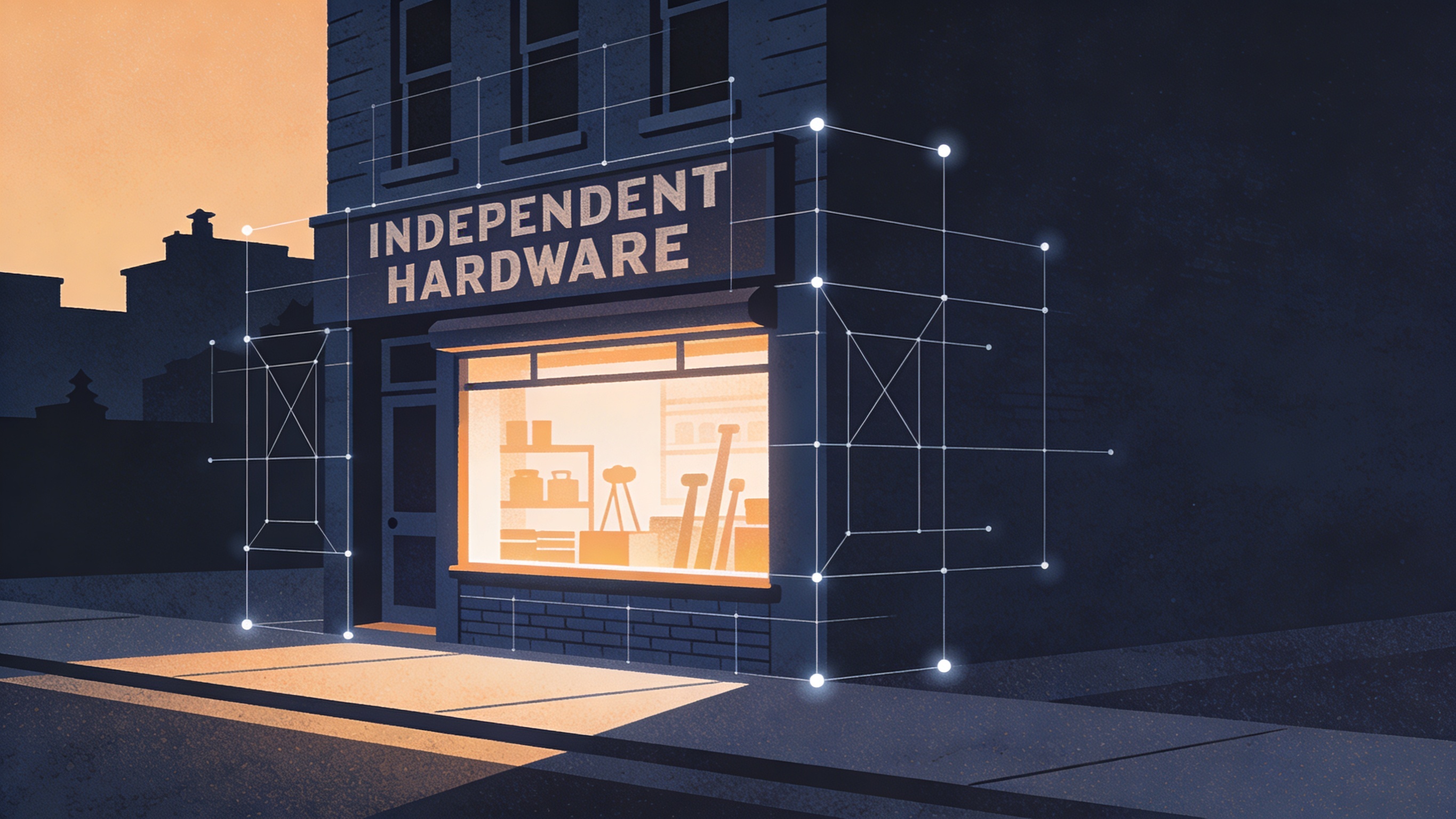
For the past few years, serious AI adoption has been a large-company sport. Studies cited by McKinsey showed that the businesses scaling AI past the pilot phase were typically the ones with expansive budgets and dedicated technology teams. The hardware store and the local coffee shop were not the target demographic. They were an afterthought at best, an inaccessible market at worst.
That calculus is shifting. Smaller and midsized businesses are beginning to move beyond the chat window, and the AI platforms are starting to notice. Anthropic made its move on May 13, announcing Claude for Small Business — a purpose-built suite of services aimed squarely at operators who do not have an IT department, a procurement team, or a six-figure software budget.
The New Toggle That Changes the Equation
Claude for Small Business is not a standalone app. It lives inside Claude Cowork, Anthropic's existing task-automation platform for business users. Cowork already handles web browsing, file management, and multistep workflows. The new offering is accessed through a toggle within that platform — paying users switch it on and gain access to bookkeeping functions, business insights, and generative tools for ad campaigns. The entry point is deliberately low-friction.
The Integration Stack
What makes the suite more than a feature update is the software ecosystem it connects to. Anthropic announced integrations between Claude Cowork and QuickBooks, Canva, Docusign, HubSpot, and PayPal. These are tools that small business owners already use daily. Linking Claude's automation layer to those platforms means a user could theoretically move from generating an ad in Canva to processing a contract in Docusign without leaving the same workflow environment.
Anthropic's Own Framing of the Gap
The company was direct about the problem it is trying to solve. In its announcement, Anthropic stated that small businesses account for 44% of U.S. GDP and employ nearly half the private-sector workforce, but that their AI adoption has lagged behind larger enterprises. The company added that tools and training are rarely tailored to how small businesses actually operate, and that as a result their use of AI often stops at the chat window. That last phrase is telling — it positions Claude for Small Business as the product that gets users past the conversation and into operational automation.
The Road Show Play
Anthropic is not relying on organic discovery. The company announced a coast-to-coast promotional tour beginning in Chicago and covering 10 cities in total. At each stop, Anthropic plans to offer a free AI training workshop open to 100 local small business leaders. The approach is deliberately analog for a tech company — going city by city to meet the audience rather than waiting for them to find the product online. It signals that Anthropic understands this customer segment requires education and trust-building, not just a product page.
The Competitive Clock
Anthropic is entering a space where OpenAI has already planted a flag. OpenAI launched Enterprise ChatGPT in late 2023, which included a ChatGPT Business tier aimed at smaller teams. That is a meaningful head start. The question is whether the integrations Anthropic has assembled — and the specificity of its SMB positioning — can carve out differentiated ground rather than simply chasing the same customers with a similar pitch.
The reception from the small business community will take time to measure. The 10-city tour gives Anthropic a structured feedback loop, but converting workshop attendees into paying Cowork subscribers is a different challenge than generating press coverage for a launch announcement.
If Anthropic's tour generates real adoption in those first 10 cities, the company may have found a playbook for reaching a customer segment that most AI platforms have addressed only in press releases. The 36 million small businesses in the U.S. represent a wide-open distribution opportunity — the harder variable is whether any AI platform can yet demonstrate enough ROI to turn that opportunity into sustained revenue at the low end of the market.