Memes do not appear from nowhere. They are drawn by someone, published somewhere, and carried forward by culture until the original authorship becomes invisible. That invisibility has always been a professional hazard for illustrators. What has changed is the scale and the commercial audacity with which original work now gets absorbed into corporate advertising without any contact with its creator.
KC Green knows this as well as anyone. His anthropomorphic dog, sitting calm and smiling inside a burning room, first appeared in his webcomic Gunshow in 2013. It became one of the most widely circulated memes of the past decade. Now, more than ten years after that comic ran, Green says AI startup Artisan used his art in a paid subway ad campaign without his agreement.
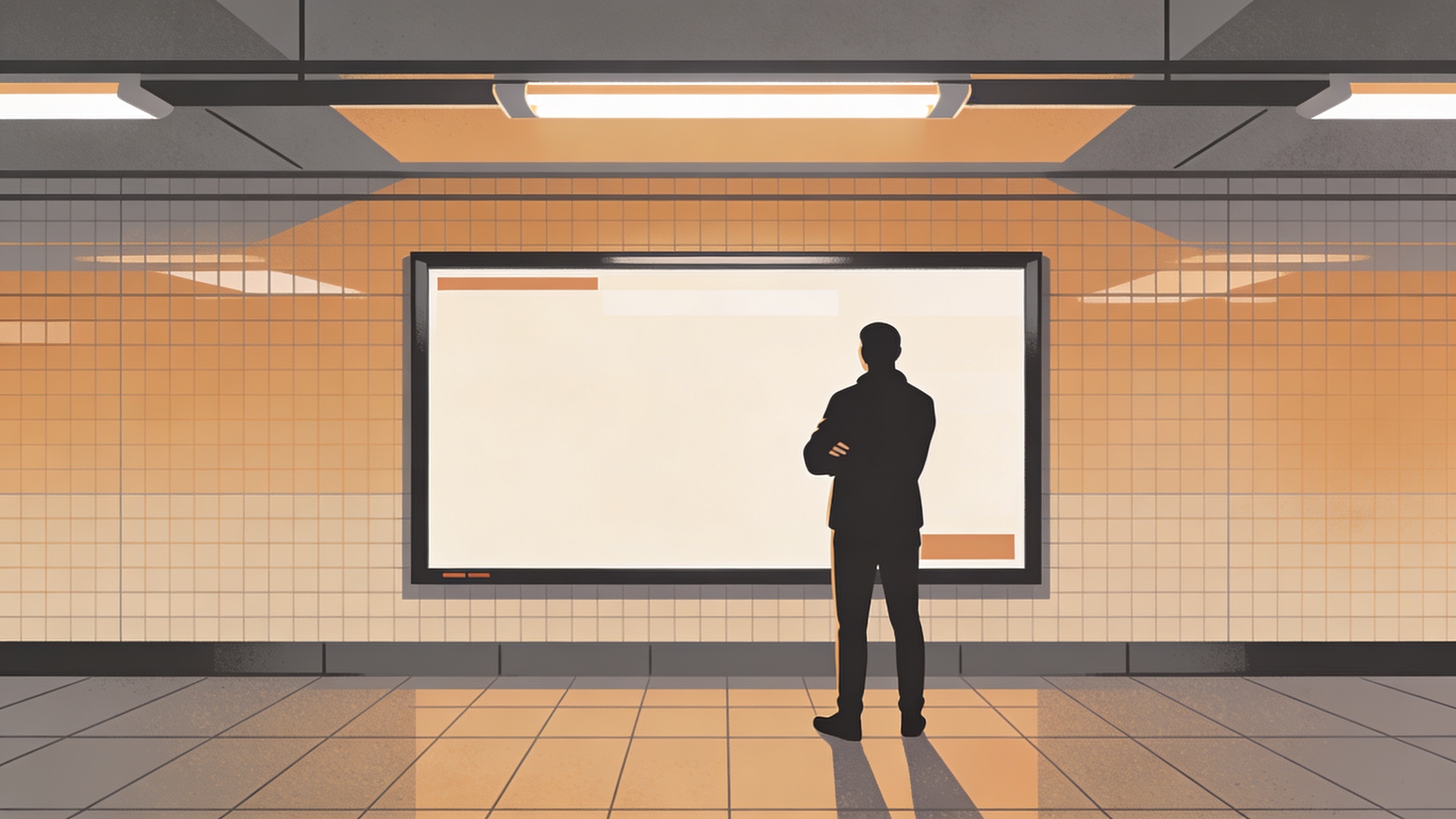
The ad, surfaced in a Bluesky post, appears to show Green's dog in a subway station placement. The dialogue has been altered so the dog says his pipeline is on fire, and an overlaid message urges passersby to hire Ava the AI BDR, a product from Artisan. Green responded directly on Bluesky, saying he had been hearing about the ad from multiple people and that it was not anything he had agreed to. He described the use as theft and explicitly told followers to vandalize the ad if they encountered it.
When TechCrunch contacted Artisan, the company responded that it had a lot of respect for KC Green and his work, and that it was reaching out to him directly. A follow-up email stated that the company had scheduled time to speak with him. No statement addressed whether permission had been sought or whether Green would be compensated.
The Work Being Taken
The original Gunshow strip is a specific piece of cartooning. The visual language, the dog's flat expression, the particular quality of the flame rendering — these are craft decisions made by Green, not assets generated by a committee. When Artisan's ad modifies the dialogue and recontextualizes the dog as a mascot for an AI sales product, it is using the accumulated cultural weight of Green's decade-long authorship to sell something he never endorsed. The alteration of the speech bubble does not create distance from the original; it relies entirely on the recognition built by the original.
Consent Was Not a Step in the Process
Green was clear that the use was not licensed or approved. His statement on Bluesky drew a direct comparison to the way AI systems ingest creative work without permission. The framing matters: he did not describe this as a misunderstanding or an oversight. He described it as structural, consistent with how AI companies treat creative work broadly. That reading is hard to dismiss given that Artisan explicitly markets itself as an AI workforce replacement product.
A Pattern of Provocative Positioning
Artisan has pursued controversy before. The company previously ran billboard campaigns urging businesses to stop hiring humans. Founder and CEO Jaspar Carmichael-Jack said at the time that the message referred to a category of work rather than humans at large. Using a meme created by a human illustrator to advertise a product that replaces human workers, without compensating or crediting that illustrator, collapses the distinction Carmichael-Jack was trying to make.
Legal Action Is on the Table
Green told TechCrunch via email that he would be looking into legal representation, adding that he felt he had to. He cited the Pepe the Frog precedent as a relevant comparison: cartoonist Matt Furie sued Infowars for using his character in a poster without permission, and that case eventually settled. Green did not commit to filing suit, but his language was direct. He also expressed the personal cost plainly, saying the situation takes the wind out of his sails because it forces him to engage with the legal system instead of drawing comics and stories.
What the Creator Said Plainly
Green's most precise line to TechCrunch was this: memes just do not come out of thin air. It is a short sentence that carries real weight for anyone working in visual communication. Every widely shared image has an origin. That origin is a person with a desk, a process, and a livelihood. When a well-funded startup uses that image in paid outdoor advertising, the argument that internet culture makes it freely available stops being a philosophical position and starts being a business strategy.
Green has not entirely stepped back from his most famous creation. He recently converted the comic into a game released through Numskull Games. The character is still his to develop and license. That context makes the Artisan ad more striking, not less: this is an active creator with ongoing commercial work built around the same IP that was used without contact.
How Artisan's direct conversation with Green resolves this remains unknown. If Green secures legal representation and pursues a claim, the case could force a clearer public reckoning with what AI-adjacent companies owe to the illustrators whose work built the visual vocabulary their ads depend on. For creative professionals watching closely, the outcome may matter well beyond this one subway station.