
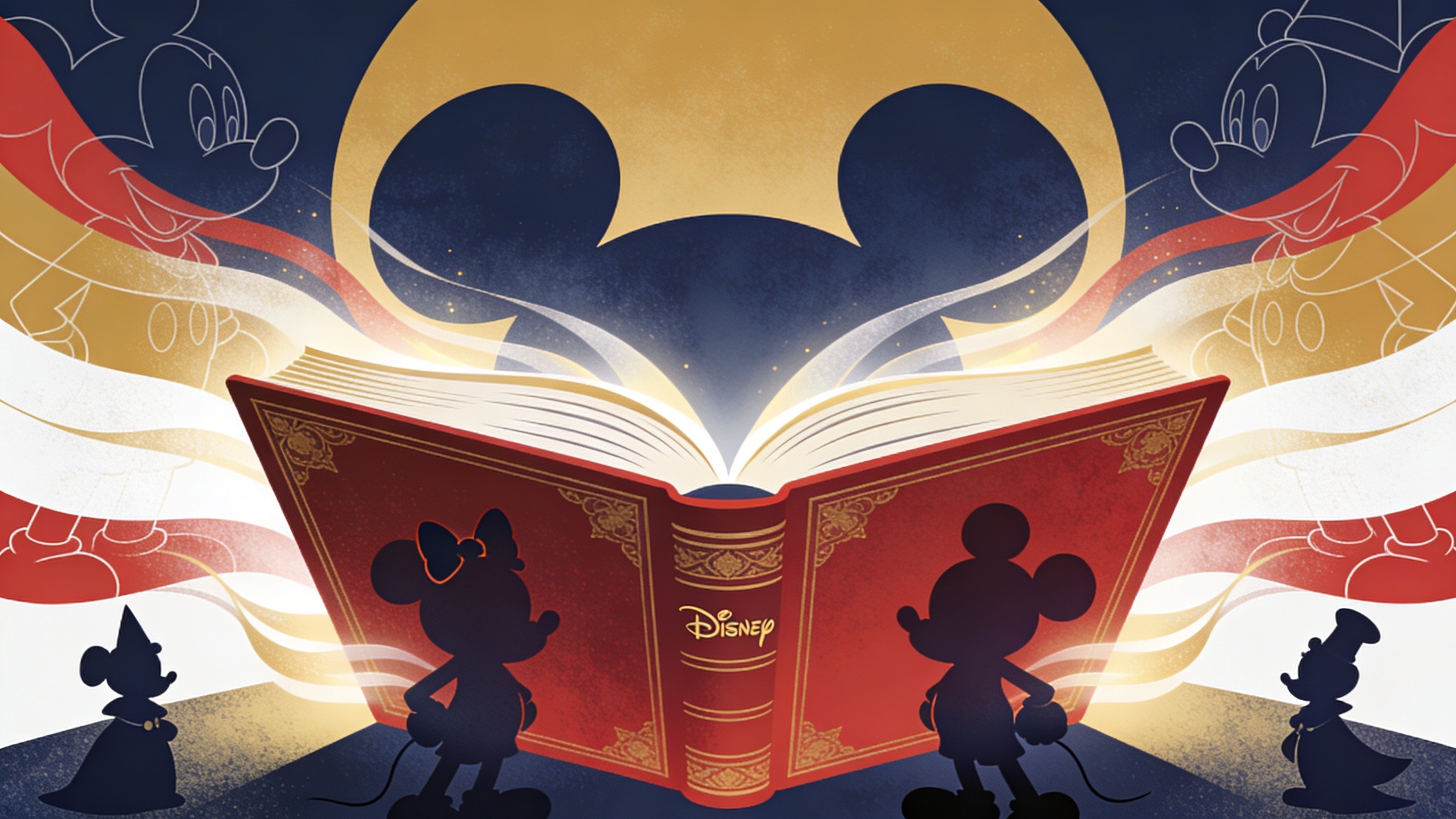
Brand licensing has always been Disney's most carefully guarded architecture. Since the 1930s the company built an identity system so precise that the angle of Mickey's ears, the weight of a princess's silhouette, and the exact palette of a Pixar sunset were each governed by style guides thicker than dictionaries. Every licensee, every theme park contractor, every consumer goods partner operated inside those walls. The system held because Disney controlled every output.
Generative video changes that equation in ways that traditional licensing frameworks were never designed to handle. When a model can synthesize a character's movement, expression, and environment from a text prompt, the style guide stops being a fence and starts being a suggestion. Disney's new agreement with OpenAI, granting Sora access to characters from across its brand portfolio, is the first major studio move that treats this tension not as a threat to manage, but as a commercial opportunity to structure.
The deal, announced April 28, allows Sora to generate video content featuring Disney, Pixar, Marvel, and Star Wars characters within parameters negotiated directly with the studio. Disney confirmed the agreement spans its full brand portfolio, meaning the visual identities of properties that collectively represent decades of compounding equity now feed an AI video model trained on creative output at a scale no previous licensee ever touched.
What makes this structurally distinct from a merchandise license or a streaming deal is that Sora does not reproduce existing assets. It synthesizes new ones. Disney is not licensing footage. It is licensing the right to generate brand-coherent visual output, which means the contract must somehow encode the visual standards that style guides previously handled. The exact enforcement mechanism has not been disclosed, but the implications for how brand identity is legally and technically defined are significant.
Brand Identity as Training Parameter
For Disney, the deeper question is whether its visual identity can survive parameterization. A style guide describes; a model interpolates. The warmth of a Pixar character's skin rendering, the specific weight of a lightsaber glow, the way a Marvel hero's costume catches light during action are qualities that took hundreds of animators and art directors decades to establish. Encoding those standards into model behavior requires translating aesthetic decisions into something closer to technical constraint. That is a new kind of brand work entirely.
Precedent for the Licensing Industry
No studio had previously structured a deal of this kind at portfolio scale. Earlier AI content agreements tended to cover music rights, voice likenesses, or still image generation with far narrower scope. Disney moving across four major franchises simultaneously sets a commercial precedent that every entertainment brand holding valuable IP will now have to respond to. The question for brand managers at Warner, Universal, and Sony is not whether to engage, but on what terms and with what guardrails.
Consumer Brand Coherence Under Pressure
Disney's brand coherence is its most durable commercial asset. The company generates roughly 40 percent of its total revenue from licensing and experiences built entirely on the recognizability of its characters. Any degradation of visual consistency across AI-generated outputs risks diluting that recognizability at scale. The agreement presumably includes output review mechanisms, but the volume of content Sora can produce makes human review of every generation implausible. Brand integrity here becomes a probabilistic problem, not an absolute one.
Creative Agencies Face a New Brief
For agencies working with entertainment brands, this deal signals a shift in what brand governance even means. Generative video tools are already inside production pipelines, and the Disney-Sora agreement formalizes that the question is no longer whether AI generates brand-aligned content, but who controls the parameters that define alignment. Brand strategists will need fluency in model behavior, not just visual standards, to advise clients holding valuable IP through this transition.
The Style Guide Is Not Enough
Disney's move exposes the limits of the document-based identity system that has governed brand management for a century. A style guide assumes a human reader who exercises judgment. A generative model requires that judgment to be encoded upstream. This is not a design problem or a legal problem in isolation. It is both simultaneously, and the tools to solve it do not fully exist yet. The brands that build those tools, or partner early with the labs that do, will hold a structural advantage that compounds over time.
Initial industry reaction split between admiration for Disney's commercial aggression and concern about what precedent it sets for smaller rights holders who lack the leverage to negotiate protective terms. Several brand attorneys publicly noted that the agreement's undisclosed enforcement language will matter more than its headline announcement.
Disney just moved the frontier of brand identity management from design systems into AI infrastructure. Every major IP holder now has a decision to make, and the window to make it on favorable terms will not stay open indefinitely. The brands that treat this as a licensing question alone will be outmaneuvered by the ones that treat it as an identity architecture question first.