
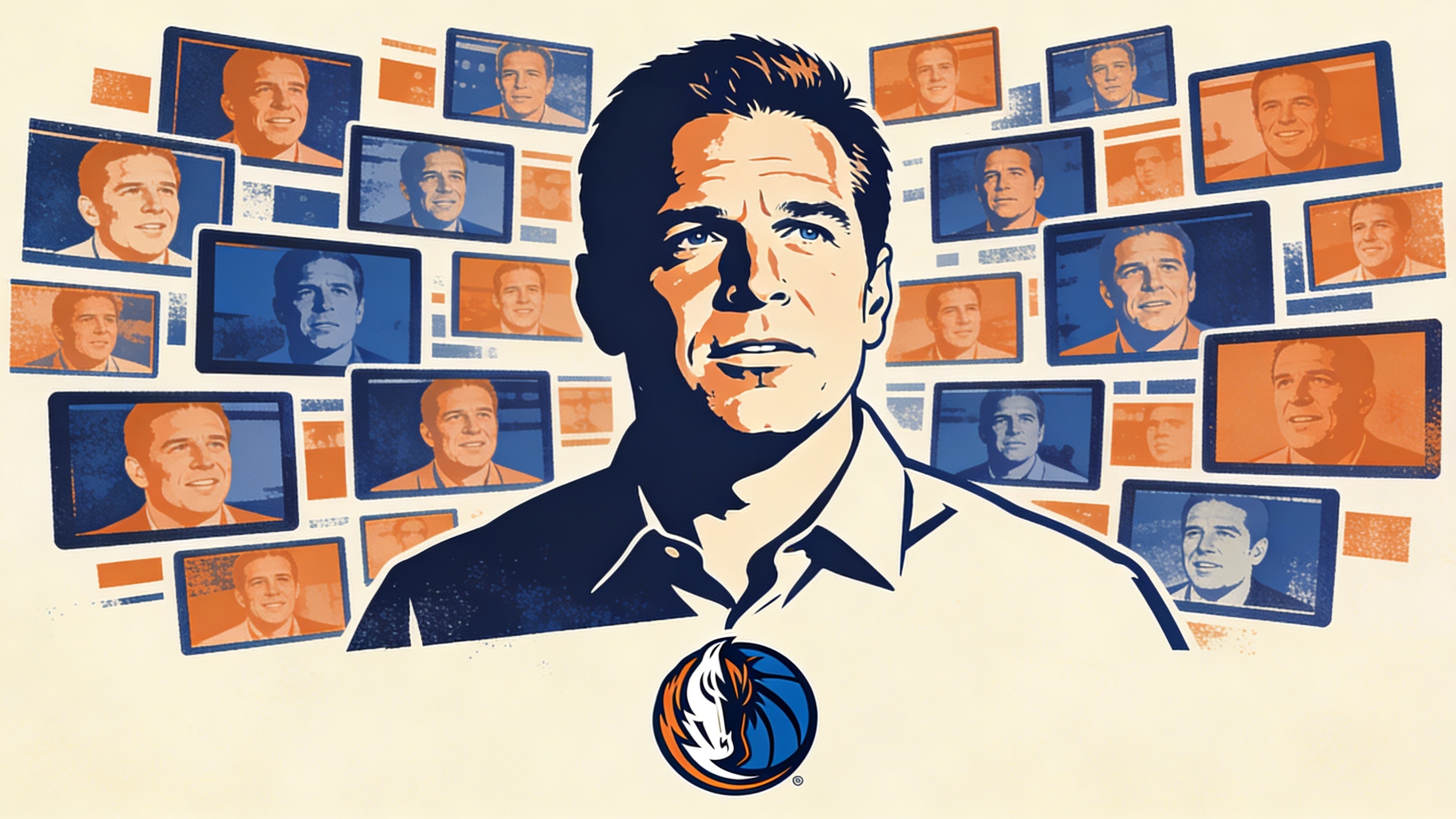
Consent has always been the third rail of AI-generated imagery. Celebrities and their legal teams have spent two years building walls around likenesses, filing suits over unauthorized AI clones, and lobbying for federal protections. The cultural assumption has hardened: your face is your property, and AI access to it is theft by default.
Then Mark Cuban did the opposite. In late April 2026, the entrepreneur publicly invited anyone to use his likeness on OpenAI's Sora 2, the video generation model that produces high-fidelity footage from text prompts. The move landed across social and tech media as either brilliant brand strategy or a reckless stunt, depending on who was reacting.
The mechanics are simple but the implications are not. Cuban posted publicly that fans and creators were free to generate video content featuring his face and voice patterns via Sora 2, with one condition attached: the content cannot be used for commercial gain without his explicit agreement. He framed it as an experiment in open creative collaboration, effectively turning his own identity into a participatory media platform.
The timing is sharp. Sora 2 launched in early 2026 with significantly improved likeness coherence over its predecessor, capable of sustaining consistent facial structure across clips longer than 30 seconds. Cuban's invitation came within weeks of that capability becoming widely accessible to paid OpenAI users, suggesting the move was deliberate rather than impulsive.
Consent as Creative Infrastructure
What Cuban did is structurally different from a brand partnership or a licensed appearance. He did not sell access to his likeness. He opened it with a rule set, turning consent into a kind of creative commons framework. This is closer to how open-source software works than how entertainment law works. The creative community gets raw material; Cuban retains commercial veto. The asymmetry is real but the permission is genuine.
The Audience Becomes the Production Team
Historically, a celebrity's visual presence required a production budget, a PR handler, and a shoot day. Cuban's move collapses that infrastructure entirely. Anyone with a Sora 2 subscription and a decent prompt can place him in a scene. That means thousands of potential brand touchpoints, character cameos, satirical sketches, and fan tributes generated at zero cost to Cuban. The volume of content this could produce in a single week likely exceeds what a traditional media team could output in a year.
Risk Is the Point
Several commentators flagged this as reckless. Deepfake technology has already been weaponized for fraud, harassment, and misinformation, and opening a real person's likeness to public generation carries genuine danger. Cuban acknowledged this. But the risk calculus here is specific: he is a public figure who has spent decades managing aggressive media coverage, political commentary, and satirical portrayal. His tolerance for reputational noise is higher than most. The move only works because of who he is, not as a general template.
What It Does for the Sora 2 Narrative
OpenAI benefits visibly from this. Sora 2 has faced friction around consent and safety since launch, and a high-profile public figure voluntarily endorsing its use with his own face shifts the conversation. Cuban becomes a case study in voluntary participation rather than involuntary exploitation. That is worth more to OpenAI than a standard influencer deal, and it cost them nothing.
The Commercial Boundary as Brand Signal
The one condition Cuban attached, no commercial use without agreement, is as important as the open permission itself. It signals he understands value and is not giving it away, just lending creative access. That boundary makes him look strategically literate rather than naive, and it preserves future monetization options. If a brand eventually pays to license a Cuban-generated clip, the originating fan gets credit as a collaborator. That loop could become a new kind of talent pipeline for branded content.
Early response on social platforms showed hundreds of Sora 2 videos featuring Cuban within 48 hours of his announcement. Engagement metrics on the original post reached seven figures across platforms. No formal data on downstream commercial inquiries has been released.
What Cuban has done is prototype a model that most public figures will eventually have to confront whether they choose to or not. The question is not whether AI will use famous faces. It is who sets the terms. Proactive frameworks like his, however imperfect, give the subject more control than silence does. Expect other figures with high public tolerance and savvy brand instincts to test variations of this approach before 2026 is out.