
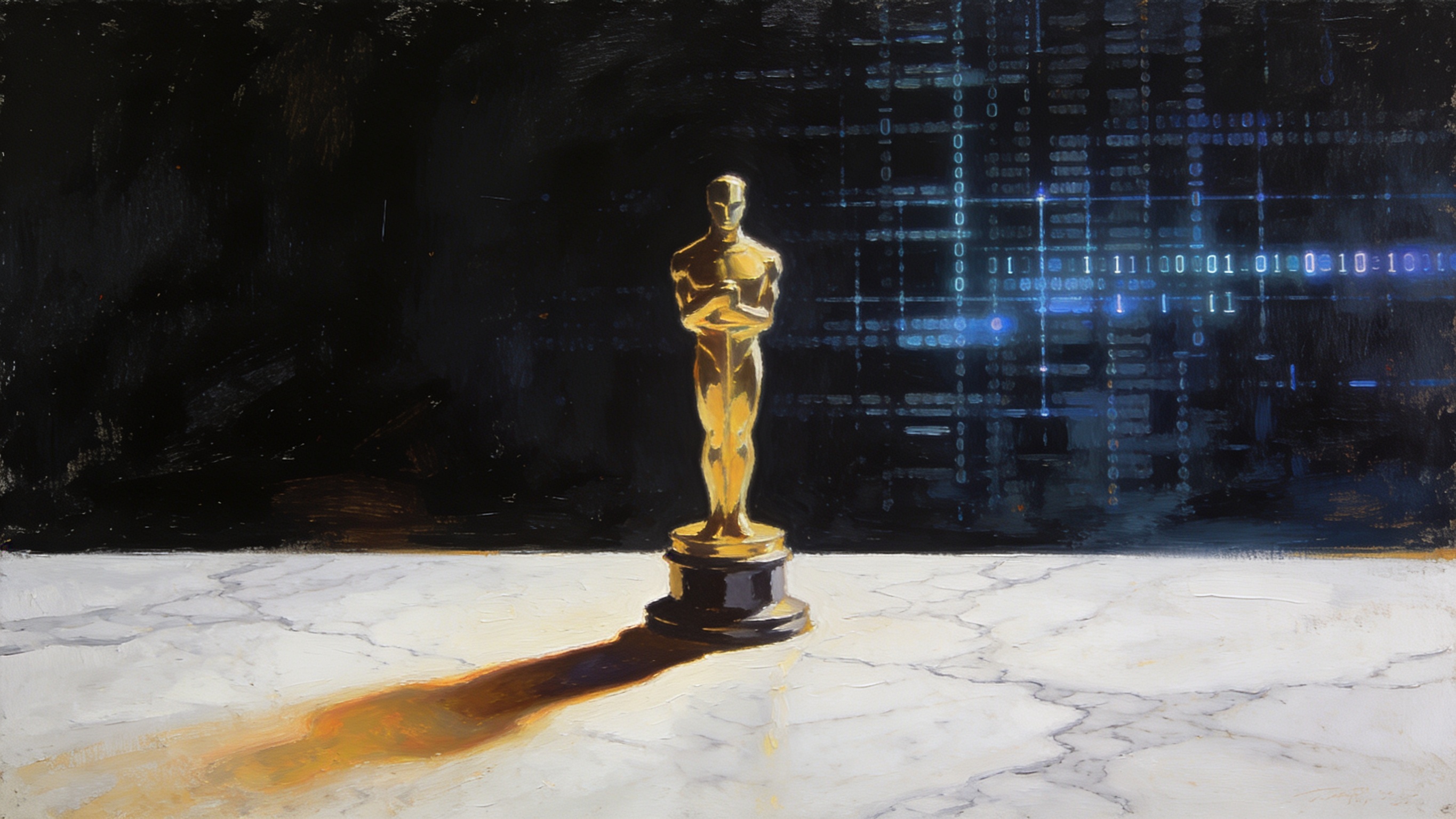
Cinema has always negotiated its boundaries with technology. Each wave of new tools, from sound to digital effects to motion capture, forced the industry to ask what still counts as human expression. The question arrived again this week, harder and more legally specific than before.
On May 2, the Academy of Motion Picture Arts and Sciences released updated rules for the 99th Oscars. Several of those rules address generative artificial intelligence directly, drawing explicit lines around what kinds of creative work can compete for the industry's most recognised honour.
The core ruling is precise. Only performances that are credited in a film's legal billing and, in the Academy's own language, demonstrably performed by humans with their consent will be eligible for awards consideration. The same standard applies to writing: screenplays must be human-authored to qualify. The Academy also reserved the right to request additional information from any film about its AI usage and the extent of human authorship involved.
The context for these rules is visible and accelerating. An independent film featuring an AI-generated version of Val Kilmer is currently in development. An AI-constructed actress named Tilly Norwood has drawn repeated media coverage. New video generation models have, according to reporting cited by TechCrunch, pushed at least some filmmakers toward public declarations of alarm. AI was also a central dispute in the actors' and writers' strikes of 2023, making these rules something the industry has been building toward for roughly three years.
The Performance Standard
Requiring that a performance be both credited and demonstrably executed by a consenting human does significant work. It closes the door on synthetic recreations of real performers, whether living or deceased. It also puts the burden of proof on the production rather than the Academy, since the Academy can request documentation at its discretion. For filmmakers working with AI tools, the line is now explicit: augmentation may be tolerated, but replacement is not.
The Authorship Standard
Applying a human-authorship requirement to screenplays places film in alignment with other creative communities. Science fiction writers and San Diego Comic-Con have already announced that AI usage disqualifies work from their awards programmes. A publisher pulled a horror novel over AI concerns earlier this year. The Oscars ruling extends this emerging consensus into the most visible awards stage in the industry, which carries weight beyond film alone.
The Consent Clause
The phrase with their consent embedded in the performance eligibility rule is the detail most worth studying. It suggests the Academy anticipates scenarios where a real human performer's likeness or voice is reproduced without authorisation, as distinct from an actor who explicitly consents to a digital representation of themselves. That distinction matters for estate cases, for posthumous performances, and for the Val Kilmer situation, where consent and authorship become genuinely complicated territory.
The Verification Mechanism
The Academy's self-granted right to request more information gives the rule actual enforcement reach, even if the process for that verification remains undefined. This moves the policy beyond symbolic gesture. Productions seeking awards consideration will need to be able to document human involvement, which creates upstream pressure on how films are made and credited, not just how they are submitted.
The Broader Pattern
These rules arrive within a pattern forming across creative industries. When publishers, genre writing communities, and now the world's most prominent film awards body all move toward the same position within months of each other, it signals something more durable than a single institution's preference. The creative sector appears to be converging on a working definition of legitimacy that requires traceable human origin.
The Academy's updated rules were approved ahead of the 99th Oscar cycle and reflect a consensus that has been building since the 2023 strikes. The Val Kilmer AI project and the Tilly Norwood story indicate that pressure to test these boundaries will not ease.
Whether the verification process proves robust enough to catch sophisticated uses of generative AI is the open question. If productions invest in obscuring AI involvement rather than disclosing it, the Academy may need enforcement mechanisms beyond document requests. Still, the rules establish a clear public standard, and that alone will shape how studios, financiers, and creative teams approach the work they want the industry to take seriously.