
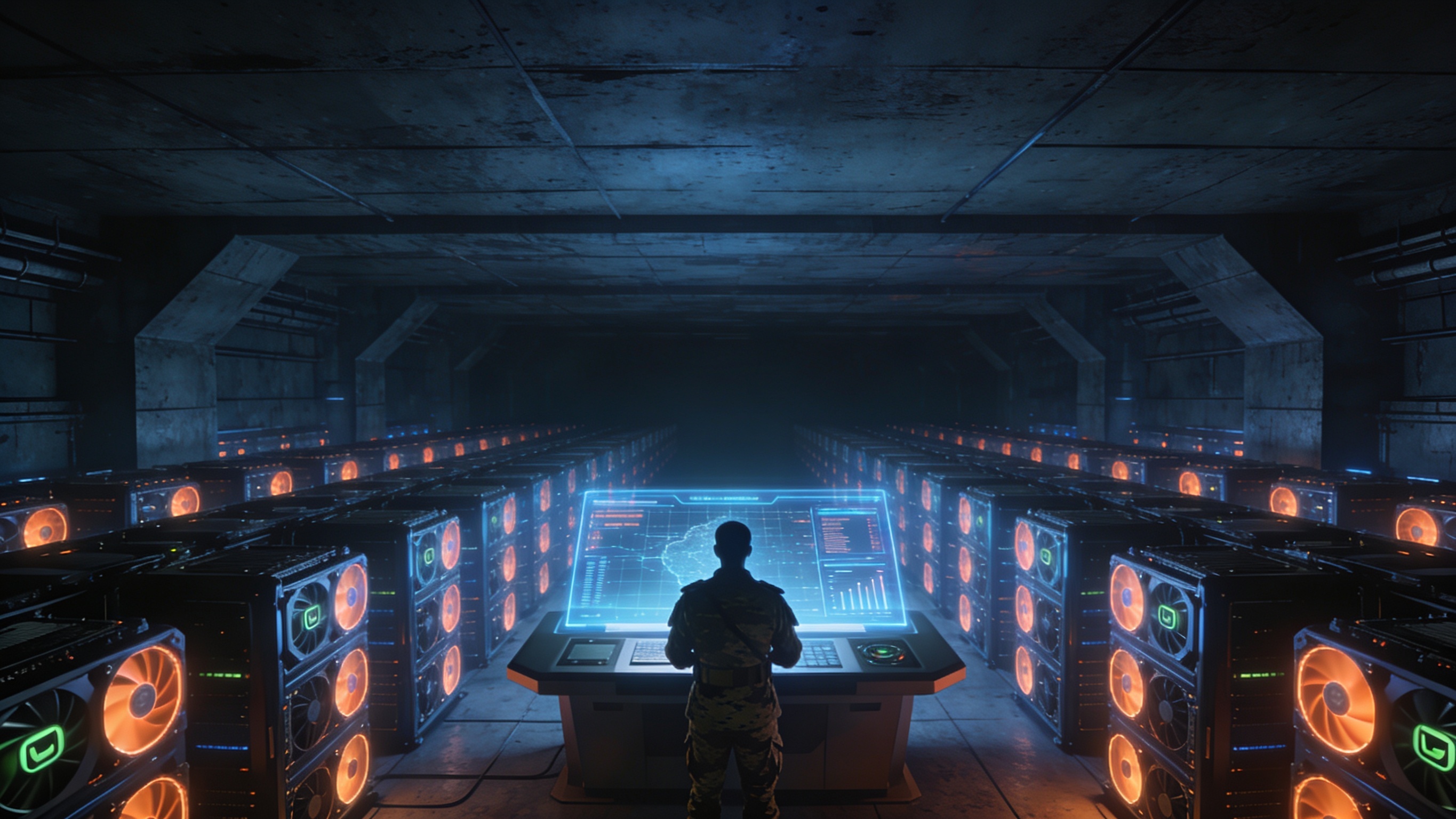
The race to embed AI into sovereign and institutional infrastructure has moved faster in the past six months than in the prior six years. Governments are no longer debating whether to adopt large language models. They are negotiating the terms under which those models operate inside their most sensitive systems. The vendor landscape is being carved up quickly, and the decisions being made now will shape the architecture of state-level AI for years.
Into that context comes a significant cluster of agreements from the U.S. Department of Defense. On May 1, the DOD announced it had signed deals with Nvidia, Microsoft, Amazon Web Services, and Reflection AI, granting all four the right to deploy their AI hardware and models on the Pentagon's classified networks for what the department described as "lawful operational use."
The announcement follows earlier agreements the DOD had reached with Google, SpaceX, and OpenAI. The new deals extend the roster considerably. According to the department's official statement, the AI hardware and models covered by these agreements will be deployed across Impact Level 6 and Impact Level 7 environments — the highest security classifications applied to data systems deemed critical to national security, requiring physical protection, strict access controls, and ongoing audits.
The DOD framed the agreements in terms of operational advantage. Its statement reads that they will "streamline data synthesis, elevate situational understanding, and augment warfighter decision-making." The department also stated its intent to "prevent AI vendor lock-in" and maintain "long-term flexibility for the Joint Force" through access to what it called "a diverse suite of AI capabilities from across the resilient American technology stack."
Vendor Diversity as Doctrine
The breadth of this roster is not accidental. The Pentagon has explicitly positioned multi-vendor diversification as a strategic posture, not merely a procurement preference. By signing with Nvidia, Microsoft, AWS, and Reflection AI in a single announcement, the DOD is signaling that no single provider will control its AI infrastructure. This mirrors how large enterprises manage cloud dependency, but at a national security scale where the stakes of lock-in are considerably higher.
The Anthropic Dispute as Accelerant
The backdrop to these deals is a live legal conflict. The DOD had sought unrestricted use of Anthropic's AI tools. Anthropic refused, insisting on guardrails to prevent its technology from being used for domestic mass surveillance and autonomous weapons. The dispute escalated when the Pentagon moved to label Anthropic a "supply-chain risk" — a designation Anthropic challenged and, in March, won an injunction against. That conflict appears to have accelerated the DOD's push to deepen relationships with vendors willing to operate under its terms.
IL6 and IL7: What the Classifications Mean
Deploying AI at Impact Level 6 and Impact Level 7 is not a routine IT procurement. These classifications apply to systems handling information deemed sensitive enough to require air-gap-equivalent protections, strict personnel vetting, and continuous audit trails. Getting AI models to function reliably within those constraints — without the kind of cloud connectivity that most commercial LLMs depend on — is a genuine infrastructure challenge. The involvement of Nvidia at the hardware level suggests on-premises or sovereign compute is central to the deployment plan.
GenAI.mil and the Scale Already Reached
The classified network deployments are the high-security tier of a broader AI adoption effort already well underway. The Pentagon reported that more than 1.3 million DOD personnel have used GenAI.mil, its secure enterprise platform for generative AI. That platform provides access to LLMs and other AI tools within government-approved cloud environments, focused on non-classified tasks including research, document drafting, and data analysis. The new classified-tier deals extend that capability into far more sensitive operational territory.
Reflection AI: The Name Worth Noting
Nvidia, Microsoft, and AWS are expected names in any large-scale government AI contract. Reflection AI is less so. Its inclusion in the same announcement as three of the world's largest technology companies positions it as a vendor the DOD considers capable of meeting IL6 and IL7 requirements. For an agency audience tracking which AI players are earning institutional trust at the highest levels, Reflection AI is a name to watch.
The DOD's statement that these agreements will help "establish the United States military as an AI-first fighting force" reflects how completely the framing around AI adoption has shifted inside government. This is no longer a technology pilot. It is infrastructure strategy.
If the Anthropic dispute continues to deepen and the injunction holds, the DOD may accelerate agreements with additional vendors further still. The multi-vendor architecture it is building could become a template that other governments follow — which would have significant implications for which AI companies earn the classification of trusted sovereign infrastructure partners, and which do not.