
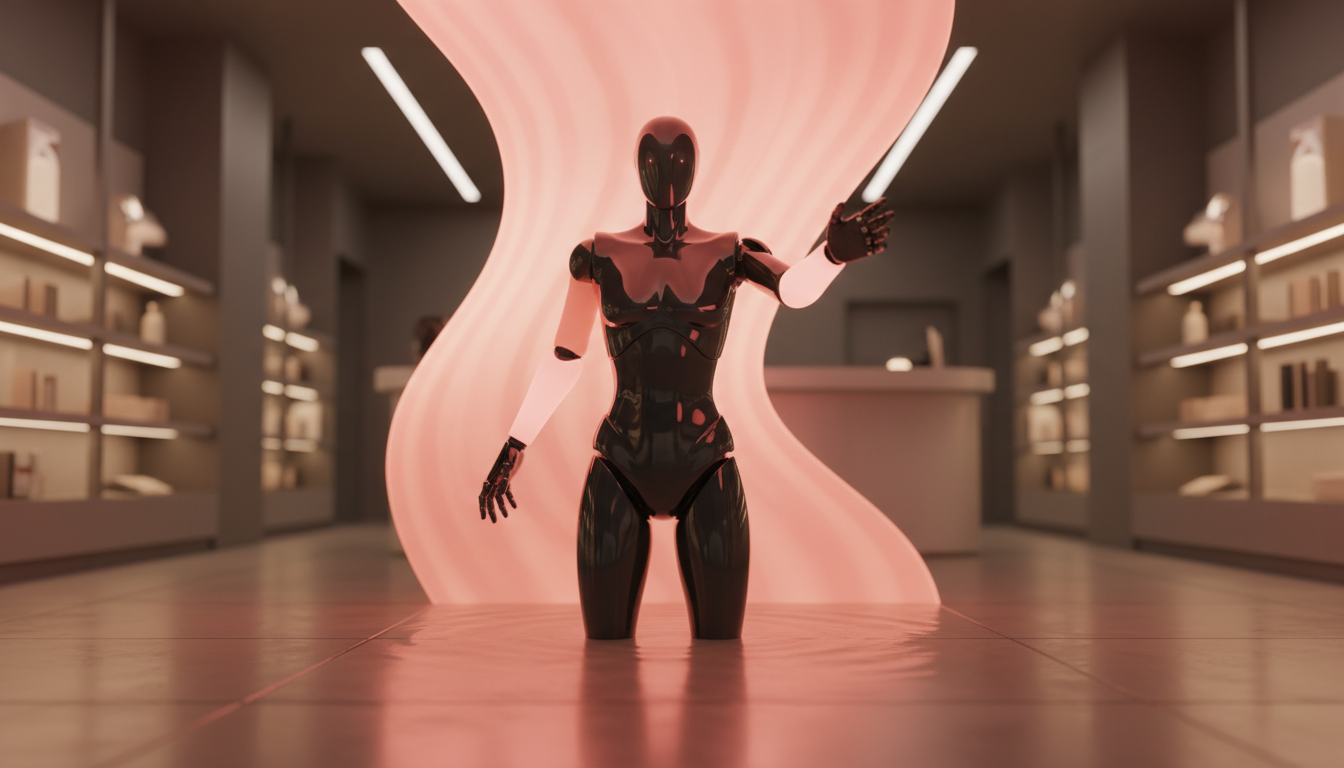
The robotics and AI hardware sector has spent the better part of a decade promising that intelligent machines would operate alongside people in physical environments. That promise, long the domain of academic research papers and venture pitch decks, is now converting into commercial product lines, warehouse deployments, and, critically, brand partnerships. The gap between what AI can do in a data center and what it can do in a room with a human is closing faster than most agency strategists have planned for.
Physical AI is the term describing systems that perceive, reason about, and act within the real world, combining computer vision, large language models, and robotic actuation into a single operational loop. Companies including NVIDIA, Figure AI (founded in 2022 in Sunnyvale), Boston Dynamics, and Apptronik are leading this category. NVIDIA's Isaac platform, the backbone many physical AI developers build on, now supports more than 400 robotics companies. The sector attracted over 38 billion dollars in investment in 2025 alone, signaling that capital has moved well past the speculative phase.
Investor's Business Daily's April 2026 analysis mapped where physical AI is making first contact with real economic activity: logistics hubs, retail floors, healthcare facilities, and construction sites. The report identified NVIDIA's Jetson Thor chip and the GR00T foundation model for humanoid robots as the two pieces of infrastructure most likely to set a commercial standard. GR00T allows a humanoid robot to learn physical tasks from video demonstrations rather than explicit programming, compressing months of training into days. Several consumer-facing brands are already piloting robotic brand ambassadors and automated in-store experience units built on these foundations.
The consumer-facing layer is where agencies need to pay attention now. BMW, Amazon, and Walmart have all announced or expanded physical AI deployments in the past six months. Each of these programs requires visual identity systems, interaction design frameworks, motion language guidelines, and customer communication strategies. That is agency work. The product exists; the creative infrastructure around it largely does not.
The Presence Advantage
Physical AI gives brands a sensory footprint that screens cannot replicate. A robot that moves through a retail space, recognizes a returning customer, and surfaces a personalized recommendation is performing a brand interaction with spatial and emotional dimensions no digital touchpoint reaches. Agencies that understand how to script, direct, and evaluate these interactions will hold a significant brief over those still optimizing banner formats. The creative direction of physical presence is a discipline that needs building now, before clients begin issuing RFPs.
Motion as Brand Language
How a robot moves is a brand decision. Speed, hesitation, the arc of a gesture, the distance it keeps from a person, all of these communicate personality and values before a single word is spoken. Industrial designers have understood this for decades in product design. Physical AI makes it a live, dynamic, and updatable variable. Agencies with experience in film direction, choreography, or character animation hold transferable skills here that pure technology vendors do not.
Training Data as Creative Brief
GR00T and similar foundation models learn from video demonstration. That means the people deciding what actions a humanoid robot performs are, functionally, writing a creative brief executed through footage. Agencies that move into this space early can position themselves as the authors of physical brand behavior, not just its visual skin. This is a content production problem disguised as an engineering one, and agencies are better equipped to solve it than most robotics firms acknowledge.
The Trust Design Problem
Consumer acceptance of physical AI in brand environments is not guaranteed and will not be uniform across demographics or cultures. Research from MIT Media Lab published in early 2026 found that physical AI acceptance drops sharply when motion patterns feel unpredictable or when the robot's purpose is unclear. Agencies skilled in attention design and audience behavior are precisely the right partners to solve this, translating behavioral research into interaction guidelines that make robotic brand experiences feel intentional rather than intrusive.
Speed-to-Pilot as Competitive Moat
The brands deploying physical AI now are not waiting for the category to mature. They are using early pilots to accumulate proprietary data on customer interaction patterns, dwell times, and conversion lifts that competitors cannot access. Agencies that bring a pilot framework, a way to scope, deploy, measure, and iterate a physical AI brand experience in under 90 days, will earn retainer relationships that go far beyond a campaign. The same logic that drove social-first experimentation now applies to physical space.
Early reception to physical AI brand deployments has been uneven but directionally positive. Amazon's Sparrow robotic system reported a 28 percent reduction in fulfillment errors in its first full quarter of deployment. Pilot retail programs in Japan and South Korea using humanoid brand assistants generated press coverage equivalent to seven-figure media buys at a fraction of the cost. The earned media signal alone is drawing CMO attention at major consumer brands.
The creative and media industry has absorbed digital transformation, social disruption, and the generative AI wave, each time after clients had already begun spending budgets elsewhere. Physical AI is not arriving slowly. The infrastructure is funded, the hardware is shipping, and the first brand experiences are live. Agencies that treat physical AI as someone else's problem until 2028 will find themselves explaining to clients why they missed the brief. The most consequential creative work of the next three years will happen in rooms, not on screens.