
Enterprise software has always moved in cycles, but the current AI wave is compressing those cycles into something closer to a continuous sprint. For large platforms managing thousands of enterprise clients, the old model of annual roadmap reviews and quarterly steering committees simply cannot keep pace. The gap between when a technology emerges and when a competitor ships a product around it has collapsed to weeks, not quarters.
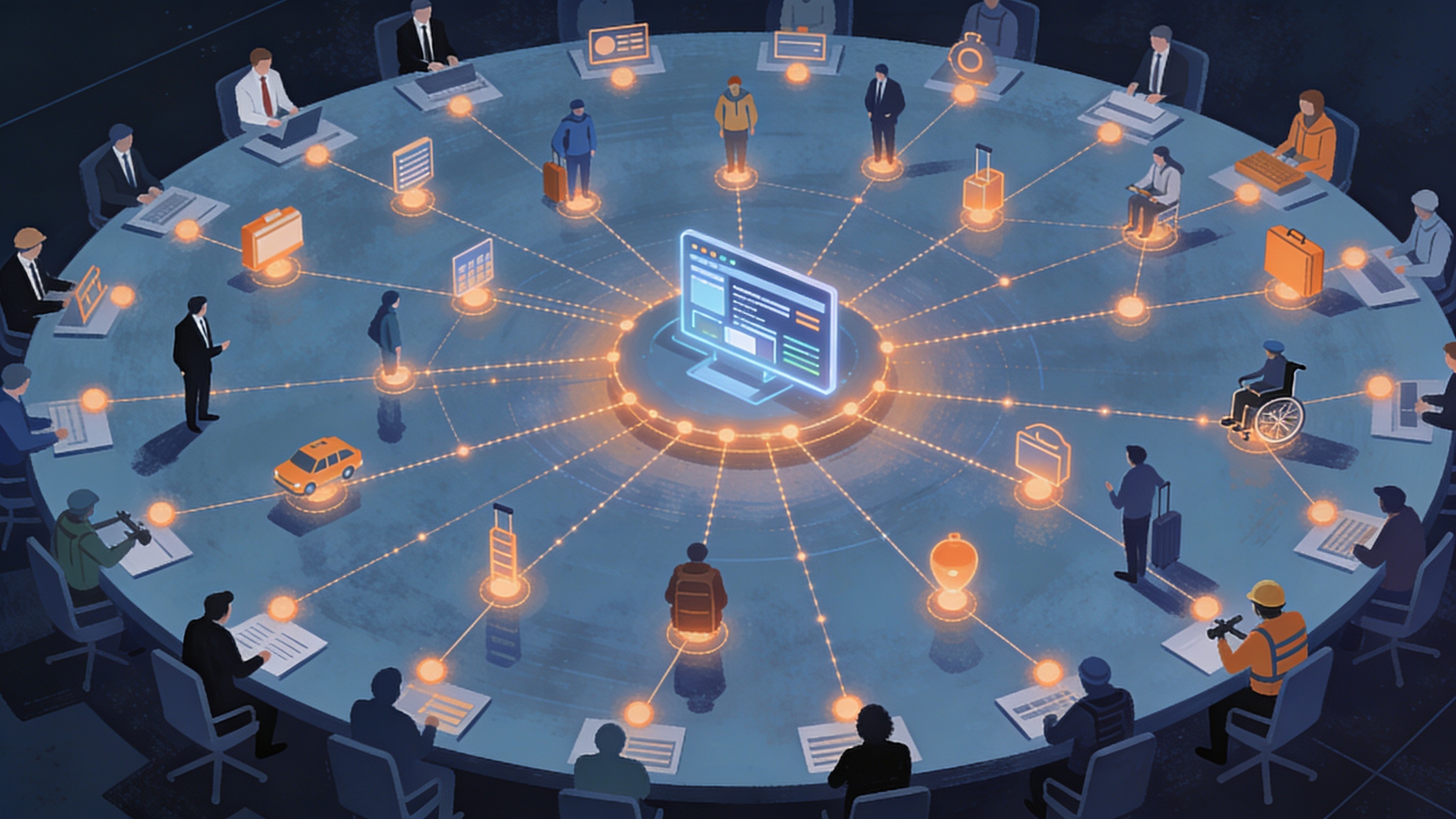
Salesforce believes it has found a structural answer to that pressure. Rather than building its AI roadmap in isolation and validating it later, the company is running a live, ongoing feedback operation with its customer base — crowdsourcing product direction in real time, at a scale and cadence that sets this effort apart from standard customer advisory programs.
The company reports working with 18,000 customers as part of what it describes as a wellspring of information driving product decisions. What makes the approach notable is not the number alone, but the frequency. Salesforce is meeting with some customers as often as once a week — a rhythm that stands in sharp contrast to the industry norm of annual or quarterly feedback cycles.
Jayesh Govindarajan, executive vice president at Salesforce AI, told TechCrunch that this density of contact is deliberate. The company is not waiting for feedback to accumulate and then scheduling a response. Muralidhar Krishnaprasad, president and chief technology officer of Salesforce engineering, put the constraint plainly: "We can't wait three months or six months to get feedback, and then go figure out another six months of work." Code is pushed fast, features are gated for early testing, and the broader release follows only after signals are confirmed.
Themes Over Timelines
Salesforce organized its development approach around strategic themes rather than fixed product schedules. The themes cited include agent context, observability, and deterministic controls. This framing lets the engineering organization respond to where technology is actually moving rather than defending a roadmap built on assumptions made six months prior. When large language models arrived and enterprises wanted to use them but lacked the infrastructure to do so, that gap became the founding logic for Agentforce, the company's agent management platform launched in late 2024.
The Customer Feedback Loop in Practice
Engine, a travel management platform, illustrates how the relationship works in practice. Engine's operations team meets with Salesforce weekly, according to founder and CEO Elia Wallen. In exchange for that access, Engine gets early exposure to AI tools before they reach general release. Wallen described a specific exchange: he found the interaction with an AI voice agent booking a hotel in Chicago to feel unnatural, flagged it to Salesforce, and shortly after observed the agent had been changed and A/B tests were showing improved results. The feedback loop closed in a matter of weeks, not quarters.
Customer Solutions That Become Platform Features
The relationship is not only about fixing problems. PenFed, a federal credit union, developed an IT service management workflow independently using existing tools and agents within Agentforce. Salesforce observed PenFed's success and rolled the workflow out to its broader enterprise customer base. Shree Reddy, PenFed's chief innovation officer and executive vice president, described the dynamic as mutual value creation. What one customer builds under pressure from real operational needs becomes a tested solution that the platform can offer at scale — a form of distributed product development that compresses the distance between prototype and release.
Internal Dogfooding as a Parallel Track
Salesforce applies the same bottom-up logic internally. Govindarajan stated that Salesforce employees are the biggest users of its own AI tools. When ChatGPT launched, the company moved teams and resources to stand up a dedicated AI group — a reorganization it describes as consistent with how it has handled previous waves of technological change. The internal usage model gives the company a second testing layer that runs in parallel with the external customer feedback operation.
The Risk Embedded in the Model
The strategy carries a clear limitation. Sourcing a product roadmap from current customers assumes those customers have a reliable read on where enterprise AI needs to go. Many enterprises are still determining what role AI will play in their operations, and a meaningful portion have yet to extract measurable value from the technology. A customer willing to test beta features today is not necessarily the same customer who will anchor a long-term software contract tomorrow. Building a roadmap around present-tense feedback can produce strong short-cycle products while leaving longer-horizon bets underinvested.
Reception among the customers named in Salesforce's program has been positive. Engine's Wallen described the access as giving his team a competitive advantage and the ability to influence products they depend on. PenFed's Reddy characterized the investment of time as yielding measurable value for both sides. The pace of product releases across Agentforce, voice AI, and Slack — the last receiving 30 new features announced in March 2026 — suggests the model is producing output at a rate Salesforce considers defensible.
Whether a crowdsourced roadmap can sustain strategic coherence over a multi-year horizon remains the open question. If enterprise AI adoption accelerates and customer needs converge around more predictable patterns, the approach could prove more durable than critics of customer-led development typically allow. But if the technology continues to shift as unpredictably as Krishnaprasad suggests — noting that agentic AI was not even common terminology 18 months ago — then Salesforce may be betting that no roadmap survives contact with the next model release anyway, and proximity to customers is the only hedge that holds.